
A complete-home furniture project moves through linked decisions: the brief, layout and item scope, proposal and quotation, drawings and samples, production, pre-shipment review, delivery and any agreed on-site work. The useful question at each stage is the same: what information goes in, what decision comes out and who is authorized to approve it?
GEORGE Group China can discuss a service route from design through on-site installation. Installation is charged separately, and the actual stages, responsible parties, destination availability and contract boundaries are agreed for the individual project.

1. Brief the whole residence
Provide the destination, residence type, rooms and outdoor areas in scope, current plans, project stage, users, priorities, visual references and known access conditions. Mark incomplete information as unknown. The first output should be an agreed statement of what is being considered, the information still missing and the next decisions.
Use the project brief guide to organize the initial material.
2. Develop the room and item scope
For each room, identify the furniture roles, quantities, approximate footprints and relevant fixed interfaces. Separate an idea from a proposed item and a proposed item from an approved specification. A current room-and-item schedule becomes the common reference for owner, designer and project team.
At this stage, verify which product categories and bespoke adjustments can be discussed. Identify the evidence needed for mechanisms, outdoor exposure, safety, destination requirements or other material performance. Do not let a reference image become the specification by default.
3. Review the proposal and project quotation
The proposal should make the intended furniture, room, quantity, configuration and key dimensions clear enough to compare with the brief. The project quotation should state its included and excluded scope, product or item references, price basis, transport and taxes where applicable, separately charged installation, validity and the documents that control later approval.
Any response or quotation timing, quotation validity, minimum project value or warranty figure must be read with the actual proposal and project conditions. This process page does not turn reference business terms into an unconditional promise.
4. Approve drawings, specifications and samples
Agree who issues and who approves the current drawing revision. Connect material and finish samples to named items and rooms. Record dimensions, orientation, materials, upholstery, hardware, mechanisms and any required evidence. If a decision changes, identify the affected items, fit, access, finish coordination, price and timing before releasing a new revision.
The approval route may differ by category and project. The quotation and project documents should state what must be approved before production and how that approval is recorded.
5. Produce against the approved references
Production responsibility may sit within GEORGE’s owned, invested partner or commissioned factory network depending on the category. The project should identify the proposed source, documents and responsibilities relevant to the selected furniture. Do not infer that every item is made in one owned factory.
Agree which progress or evidence records are expected and who reviews them. A general factory or product image is not proof that a particular item has reached a stage or passed a check.
6. Compare completed furniture with the approved version
Before packaging or shipment, use the project’s agreed method to compare room and item references, quantities, key dimensions, visible materials and finishes, hardware or functions, and requested photo or record evidence. Record differences and decide who can close them and release the items. This page does not claim a fixed GEORGE inspection procedure, third-party check or guaranteed result.
The separate pre-shipment page should carry the detailed buyer checklist and the actual project should state the reviewer, records and release point.
7. Package, deliver, receive and install as agreed
Confirm package identification, destination, transport responsibility, receiving conditions, access route, site readiness, damage or difference records and any assembly or on-site installation work. Global enquiries are welcome, with current focus on Europe, the Middle East, East Asia and the Americas, but delivery routes and services vary by destination.
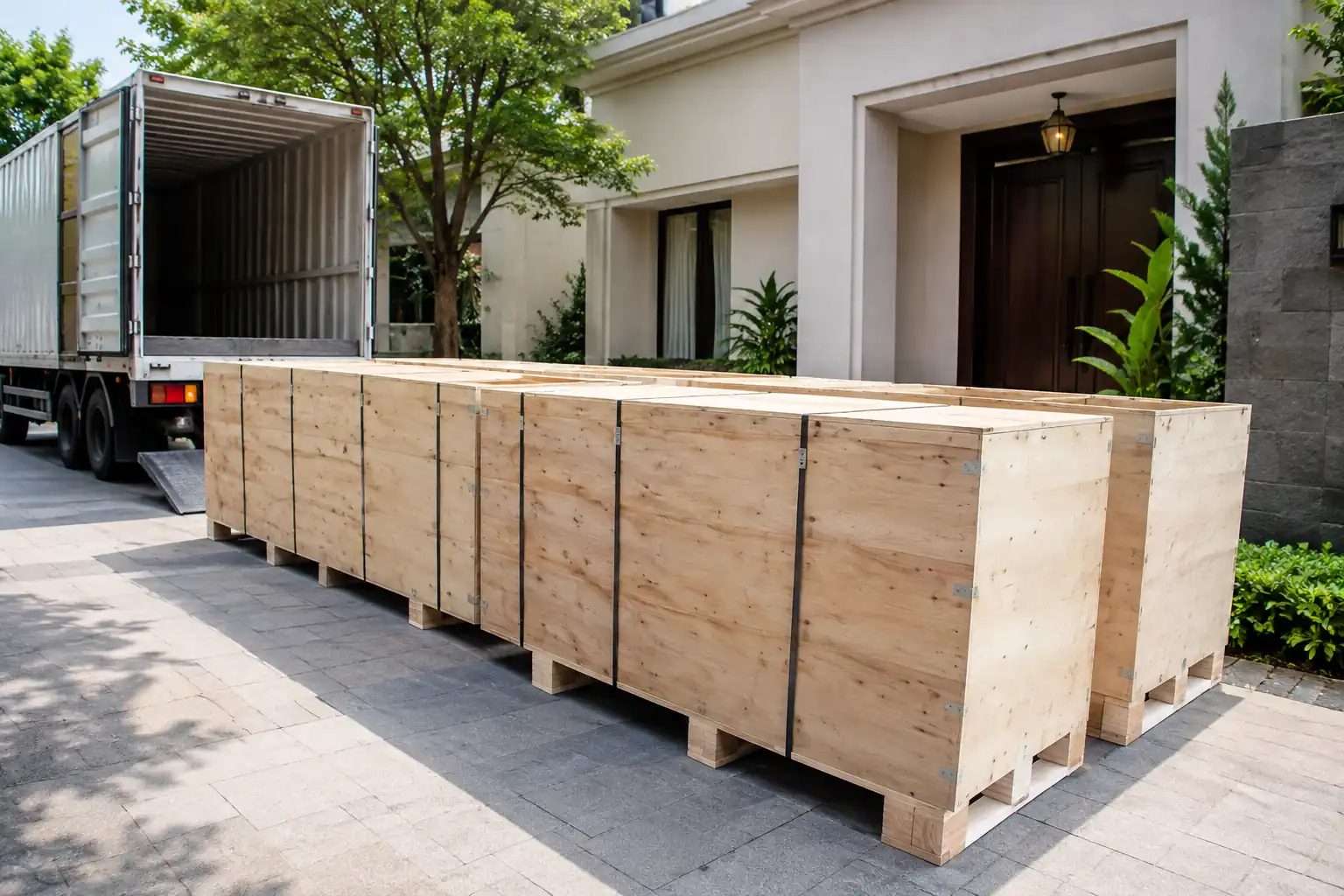
Where installation is included, record the separately priced scope, site access, responsible trades, power or lifting needs, protection, waste handling, completion evidence and handover. Where it is not included, identify who receives, moves, assembles or installs the furniture.
For more detail, review quotation and production approvals, completed furniture before shipment, and delivery and installation responsibilities.
Keep one decision record through the stages
| At each handoff | Record |
|---|---|
| Current basis | Drawing, schedule, specification, sample and quotation revisions |
| Decision | What is approved, rejected, changed or still open |
| Authority | Who may approve for the owner and who acts on the instruction |
| Evidence | What document, image, measurement or sample supports the decision |
| Next gate | What must be complete before the project moves on |
Discuss the process for your whole-home furniture project. Share the destination, current stage, rooms in scope and the next decision or handoff you need to define.