
Seating comfort is a combination of posture, dimensions, support and upholstery. Two sofas that look similar can feel different, and one household may need more than one sitting position in the same home. Begin with how the seat will be used, then compare the actual proposed construction and sample information. A photograph cannot establish comfort or material performance.
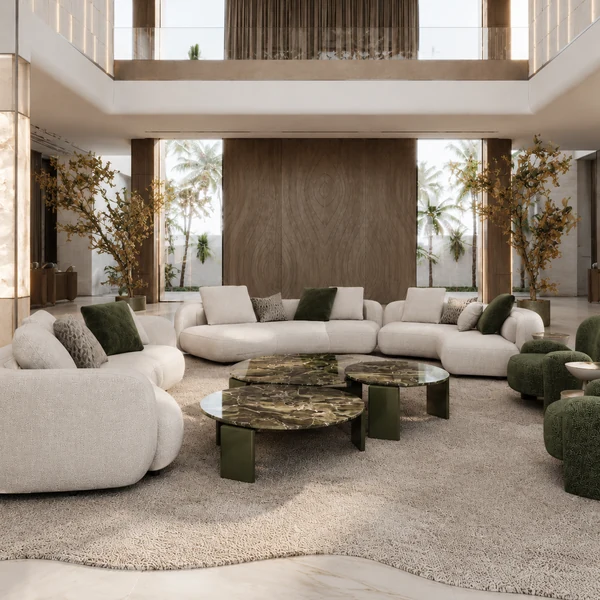
Describe posture before softness
Ask the regular users to describe what they do: upright conversation, relaxed lounging, reading, watching television or occasional entertaining. Then record the body support that matters. “Soft” and “comfortable” are too broad to control a proposal.
| Feature | What to compare | Possible conflict |
|---|---|---|
| Seat height | Ease of sitting and standing, relation to tables | A low visual profile may be difficult for some users |
| Seat depth | Upright support versus room to lounge | A deep seat may need cushions or may not suit shorter users |
| Back | Lower-back, shoulder or head support and sitting angle | A low back preserves sightlines but changes support |
| Arms | Height, width, support and usable seat width | Wide arms increase overall footprint |
| Cushion response | Initial feel, support and recovery | Visual fullness does not establish internal construction |
Read the profile and footprint together
A curved or deep sofa can support relaxed use but requires enough floor area and a clear approach. Draw the full footprint on the plan, including any return, chaise or reclined condition. State the orientation and the regular number of users before discussing appearance.
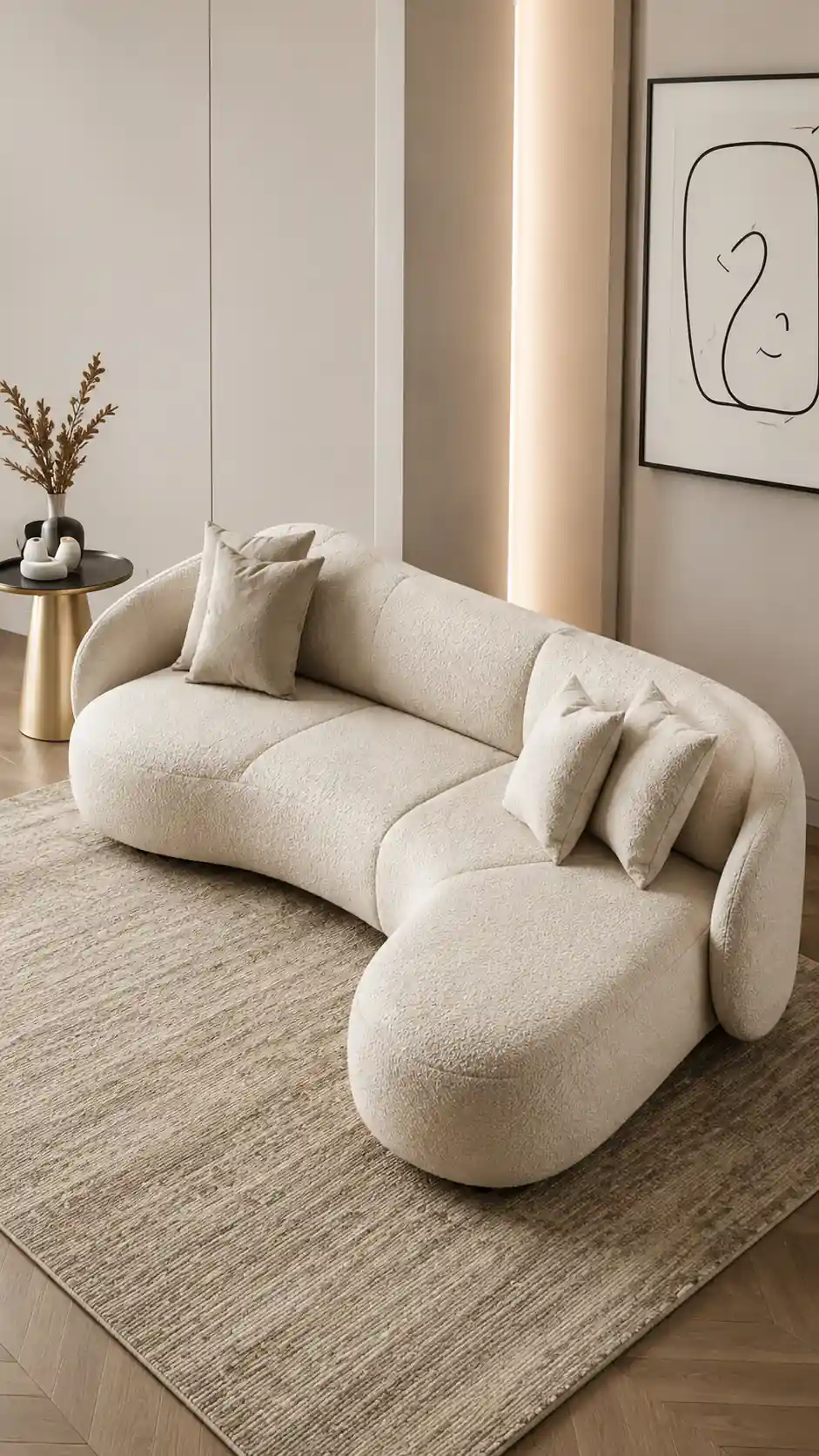
Check delivery access with the actual overall, sectional and packed dimensions. Do not assume a large seat can be separated for entry.
Compare upholstery by touch, appearance and care
Record whether the household prefers a smooth, textured, crisp or soft hand, and how much visible variation is acceptable. Review a swatch under the home’s light where practical. On directional or pile fabrics, note how the appearance changes with angle. On curved forms, ask how seams, piping and pattern direction will be handled.
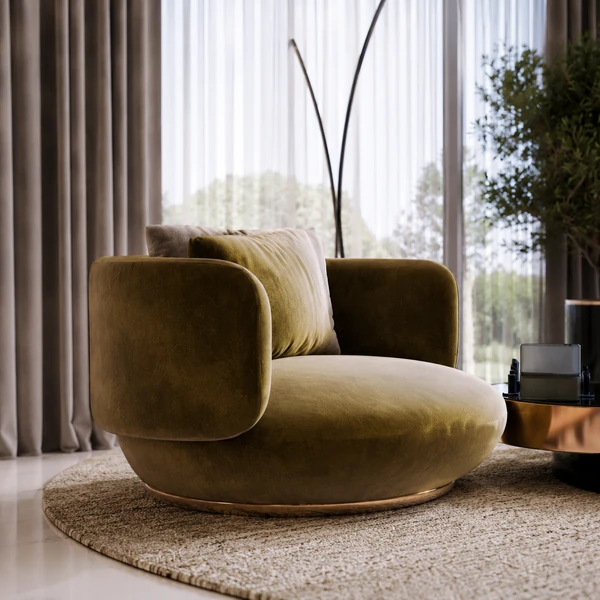
Ask what cleaning guidance applies to the actual proposed upholstery and finished piece. If a stain, abrasion, colourfastness, fire or other performance requirement matters, state the use and destination and request matching evidence. Do not infer a rating from a colour, fibre description or reference image.
Use samples without treating them as a full seat test
A fabric or leather swatch can confirm the selected appearance and hand. It cannot reproduce the support, cushion response, back angle or complete upholstered form. The project review should therefore keep the sample reference and the seat specification together.
- Identify the exact sofa or chair and its room.
- Connect the swatch reference to the current proposal or drawing revision.
- Record the approved colour, texture, seam or piping direction and any acceptable variation.
- Confirm the seat dimensions and available construction information separately.
- Name the person who approves the final upholstery and comfort direction.
Prepare a comfort and upholstery brief
- seat type, room, regular users and main activity;
- upright or relaxed posture, seat-depth preference and required back or arm support;
- room and access dimensions, configuration and orientation;
- upholstery appearance, hand, colour and household care preference;
- children, pets, food, sun or other use conditions that affect the question;
- sample and evidence needs; and
- the person who will approve the final specification.
Discuss upholstery and seating comfort within your whole-home furniture project. Share the room, users, desired posture and labelled visual references.